
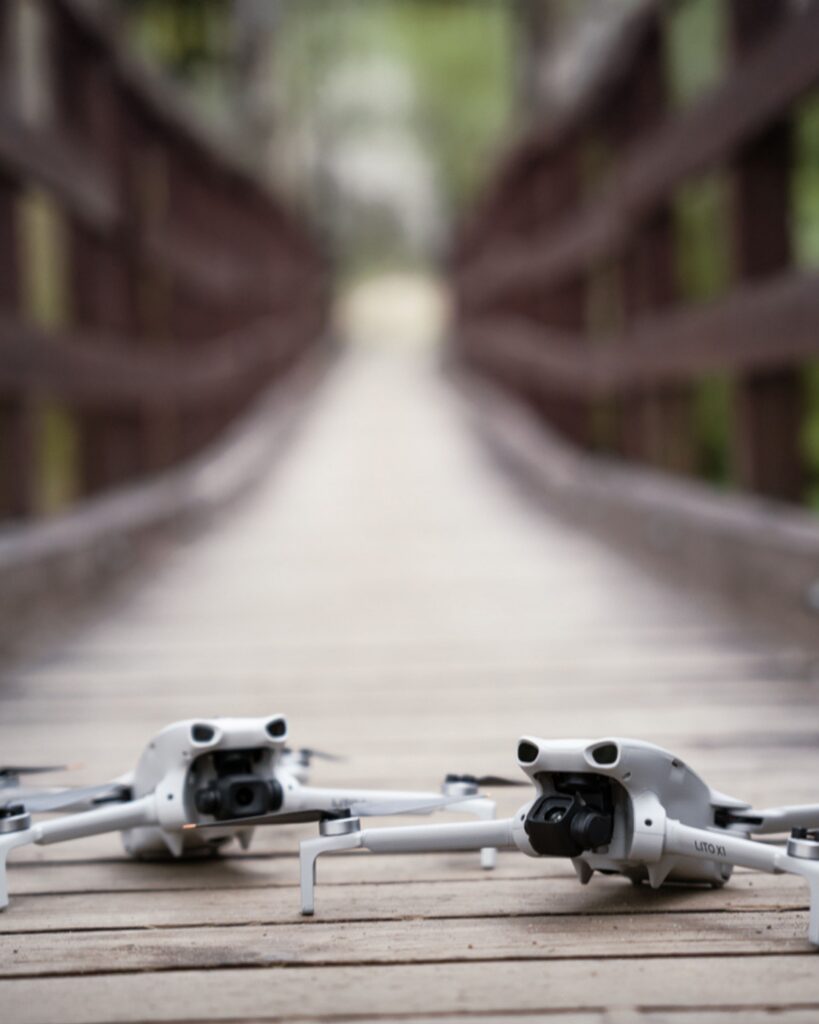
DJI has launched the Lito series, and honestly, it feels like they’re still one step ahead of the competition. Until now, the Mini 4K was the classic “first drone” choice, but it’s becoming pretty clear that the Lito series is taking over that role — and doing it convincingly.
Both the Lito 1 and Lito X1 are primarily designed for beginners and hobbyists, but in reality, they offer features we previously only saw in more expensive drones. That’s easily their biggest strength.
Small, Lightweight, and Easy to Take Anywhere
Both drones weigh under 250 grams and feature a foldable design, making them extremely easy to carry around. This isn’t just a “travel drone” — it’s more the kind of drone you naturally bring everywhere, whether it’s a hike, a trip abroad, or simply a weekend photo session.
In the air, the Lito feels very stable and easy to control. That’s especially important for beginners because the drone never feels nervous or unpredictable. At the same time, it has enough speed and power to follow moving subjects — whether it’s a cyclist, a car, or even surfing footage.
One important detail: this is not an “indoor drone.” The open propeller design means it’s primarily built for outdoor use and more active cinematic shots.
Safety – DJI Made a Big Leap Here
One thing that immediately stands out about the Lito series is obstacle sensing. Both models feature 360° obstacle avoidance, which is far from common in this price range.
The Lito X1 takes it a step further by adding a forward-facing LiDAR sensor. This allows the drone to better “see” more challenging objects — such as thin branches or obstacles in low-light conditions. In practice, this makes flying noticeably safer and gives the pilot more confidence, especially when using ActiveTrack.
And honestly — it works surprisingly well. The drone can follow a subject while smoothly maneuvering around obstacles without requiring constant manual intervention.
Flight Time and Ease of Use
Battery life is very strong for this class — up to 36 minutes on a single charge. In real-world use, that realistically translates to around 25 minutes, which is still a very respectable result.
The Lito series also supports DJI QuickTransfer (WiFi 6), making it fast and convenient to transfer files directly to your phone. That’s especially important for social media creators who don’t want to use a computer every single time.
You also get all the familiar DJI smart features — ActiveTrack, QuickShots, and more — making filming easy even if you don’t have much experience.
Camera – The Biggest Difference Between the Two
While the design and flight characteristics of the Lito 1 and X1 are quite similar, the biggest difference comes down to the camera.
The Lito 1 uses a smaller sensor and is well suited for everyday use — social media, hobby photography, and casual video shooting. In good lighting conditions, it delivers very nice results, but image quality starts to drop more quickly in low light.
The Lito X1 is on another level. A larger sensor, 10-bit video, and the D-Log M profile provide significantly more flexibility in post-production. This means better dynamic range and generally cleaner footage — especially in more difficult lighting situations.
During the day, footage looks sharp with accurate colors, and even at night or in low light, the drone can still produce very usable content. It’s not in the same league as the Mini 5 Pro or larger drones, but within its category, it’s a very strong performer.
On the downside, the digital zoom isn’t particularly impressive, and vertical video cannot be recorded naturally by physically rotating the camera.
Tracking and Real-World Use
ActiveTrack performs well on both models, but thanks to the LiDAR sensor, the X1 is clearly more accurate — especially in more complex environments or low-light conditions. If you plan to film motion-heavy content such as cycling, running, or cars, the difference is genuinely noticeable.
The drones can fly fairly fast and handle wind reasonably well, making them excellent tools for active cinematic shots. However, they are not designed for acrobatics or FPV-style flying — they are much more focused on stable and controlled filmmaking.
Final Thoughts – Which One Should You Choose?
With the Lito series, DJI has made a very strong move. They’ve brought features that were previously reserved for higher-end drones into a far more accessible price range.
When it comes to real-world use:
• The Lito 1 is a great option if you simply want your first drone for photos and videos without doing much post-processing.
• The Lito X1 is the model I would recommend to most people — for a relatively small price difference, you get a significantly better camera, LiDAR, and much more flexibility.
Available in our online store: DJI Lito 1 from €339 • DJI Lito X1 from €419€419